Add AI to Your Existing SaaS Product in Weeks
LLM integration services for product teams. AI copilots, RAG pipelines, Claude and OpenAI features — built into what you already have. No rewrite. No six-month roadmap.


LLM Integration Services for SaaS Products
Your product already works. We add the AI layer.
Most SaaS teams don't need a new product. They need the one they have to get smarter — a copilot in the sidebar, search that understands questions, support that answers itself. That's what we build. Into your stack, on your data, in weeks.
Who we work with
Product teams that need to add AI to an existing SaaS without stalling the roadmap
Startups shipping their first LLM feature before the next funding round
Founders with a working product and a list of "AI" requests from users
What we build
AI copilots inside your SaaS — in the sidebar, in the editor, wherever your users work
RAG pipelines: LLMs that answer from your docs, tickets, and database, not from the internet
Claude and OpenAI integrations for support, onboarding, and internal ops
- Starting from zero instead? That's our AI MVP service →
What We Do: LLM Integration, Copilots, RAG
Five things. We do them well and we don't pad the list.
AI Copilot Development for SaaS

LLM Integration into Your Existing Product

RAG Development Services

Claude & OpenAI Integration Developers on Demand

AI Strategy & Use-Case Discovery


Models We Integrate: OpenAI, Claude, Llama, Bedrock


From copilots to custom ML — we've shipped it.
Need something specific? Pick from the list, or tell us what your users are asking for. Most of it starts with an LLM integration and ends with a feature they don't want to live without.
Go from prompt to output — useful, on-brand, and instantly usable
1
Generate product descriptions, summaries, landing copy
2
AI image generation from idea or sketch
3
Agents that complete tasks & interact with APIs
4
Smart data parsers & summarizers
5
GPT-like chat interfaces for users
6
Support agents with memory & context
Build copilots that reduce manual effort and make work smoother.
1
Auto-reply bots for helpdesk / support
2
Workflow automation via natural language
3
Dispatch / scheduling assistants
4
Analytics insights via chat
5
Internal knowledge Q&A bots
6
Feedback & training copilots
Make smarter decisions — backed by data.
1
Forecasting (demand, churn, traffic, etc.)
2
Time series & trend modeling
3
Classification & smart labeling
4
Anomaly detection for ops or fraud
5
User scoring & probability modeling
6
Smart ranking & search
Make sense of user input, feedback, docs, and conversations — in any format.
1
Conversational agents for customer service
2
Auto-translation & transcription tools
3
Trend spotting in messages & logs
4
Smart text categorization
5
Sentiment analysis for product/UX feedback
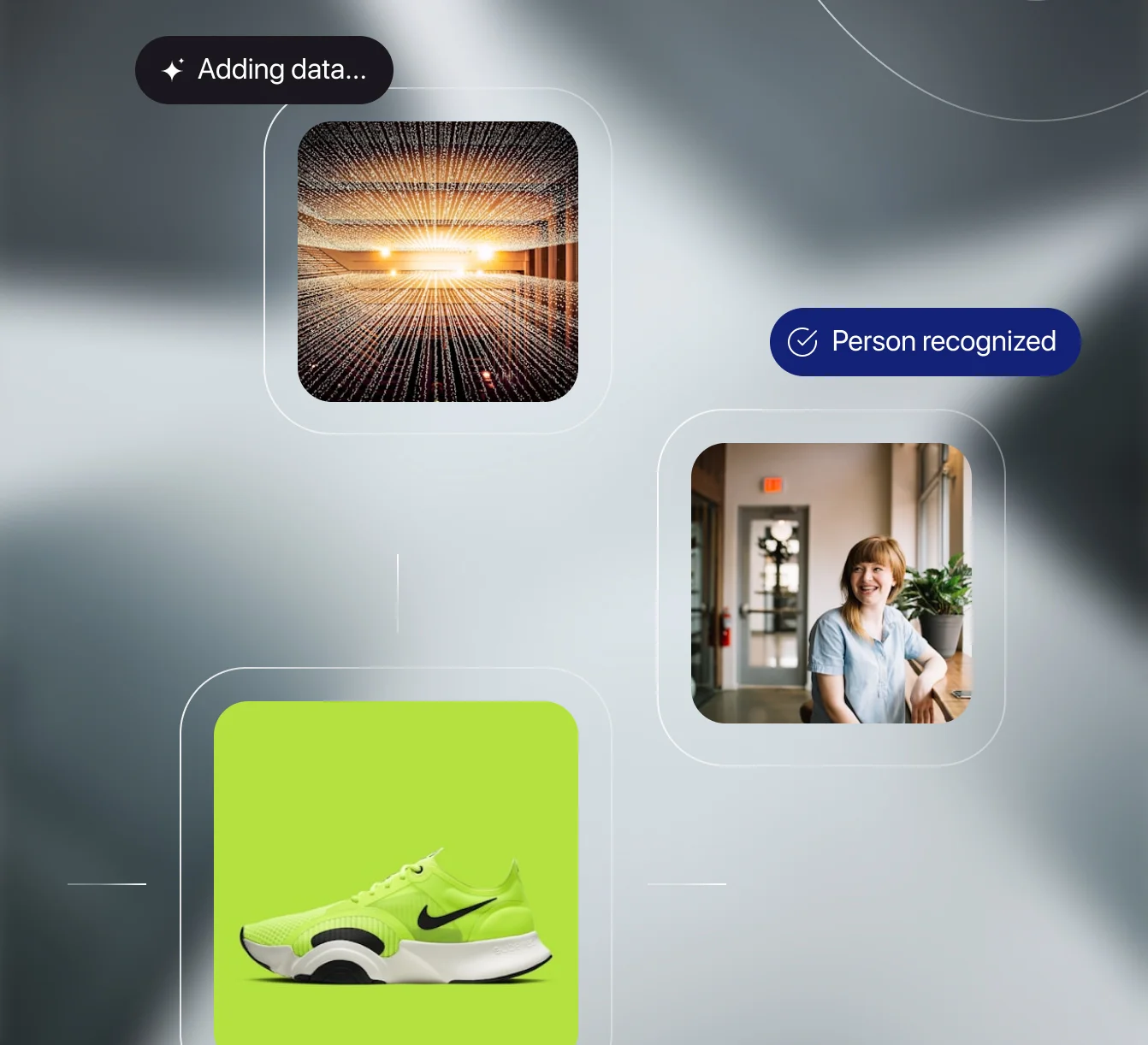
Automate what eyes can’t scale — from inventory to people to content.
1
Object recognition for logistics, retail & QC
2
Face-based access or verification
3
Real-time tracking of assets & people
4
Auto-tagging & categorization of images
5
AI-generated image captions or summaries
6
Upscaling and enhancement of images
Show the right thing to the right user — automatically.
1
Product & content recommendation systems
2
Personalized feeds, emails, dashboards
3
Ad optimization based on user signals
4
Real-time behavior-based adaptation
5
Multi-source filtering (collaborative + content-based)
6
Onboarding flows that adapt to intent
Book a free intro call!

How an LLM Integration Project Runs
Week 1: Audit & Scope
We read your codebase, look at your data, and talk to whoever owns the roadmap. Out of that comes a fixed scope: what the AI feature does, which model, what it costs to run per month. No surprises after this point.
Week 1-2: Data & Retrieval
If the feature needs your data — and it usually does — we build the retrieval layer first. Chunking, embeddings, vector store, access rules. The LLM only ever sees what that user is allowed to see.
Week 2-4: Build & Evaluate
Prompts, tool calls, guardrails, fallbacks. We write evals before we write the feature, so "it works" means something measurable. You see a demo every week and tell us where it's wrong.
Week 4-6: Ship Into Your Stack
The feature goes into your product, your repo, your CI. OpenAI, Claude, or Bedrock behind a clean interface, so switching models later is a config change, not a rewrite. Monitoring and cost tracking included.
After Launch: Watch & Improve
LLM features drift. Models get updated, users find edge cases, costs creep. We watch the evals, fix what breaks, and tune what's expensive. Retainer if you want us around, clean handoff if you don't.
Ready to add AI to your product?
Why SaaS Teams Pick Lunqor for LLM Integration
15+ Years of Expertise
Evals before features
Commitment to Innovation

